Home / Blog / How to Become a Sports Massage Therapist
Learn how to become a practitioner of sports massage therapy
Professional sports stars, amateur athletes and even those of us aspiring to live more active lifestyles can all benefit from sports massage therapy.
From flexibility to rehabilitation, sports massage training teaches students how to treat a wide range of muscle and performance issues and emphasizes injury prevention as the key to boosting the life of a person’s sporting career.
A sports massage therapist must possess specific skills and meet certain requirements to practice like completing a professional massage therapy program and getting a license in massage therapy. We’ll cover these requirements in greater detail, as well as the salary, job outlook, and duties of a massage therapist for athletes.
What is sports massage therapy?
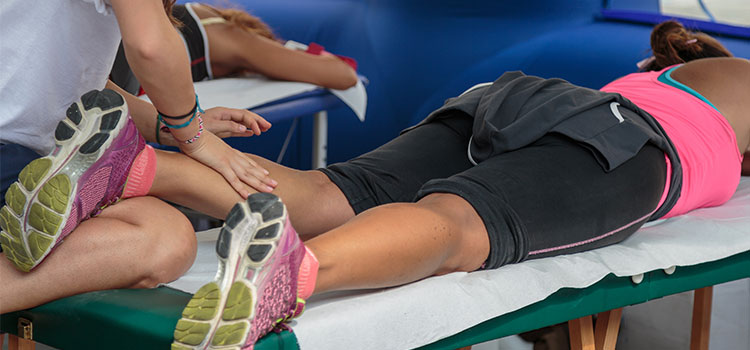
Sports massage therapy is a manual manipulation (through touch) of the muscles to help athletes deal with or handle the impact of their activities on specific joints, soft tissue groups, skin, tendons, ligaments, fascia, and muscles.
Sometimes referred to as athletic massage therapy, it’s a form of physical therapy that involves manipulating the body’s soft tissue to:
improve movement and flexibility,
promote recovery,
reduce inflammation,
alleviate pain and its symptoms,
reduce the risk of injury in the future, and
restore normal tissue function and form following an injury.
Similar to the role of an expertly personal trainer, a good sports massage therapist also strives toward preemptive care and helps prevent many of the above symptoms from occurring in the first place.
Benefits of a sports massage
Who is sports massage for and how does it help? Professional sports stars, amateur athletes, and even those of us aspiring to live more active lifestyles can all benefit from sports massage.
These massages are most effective before and after an event or for continuous maintenance to enhance recovery, reduce inflammation and reduce the risk of future injury. It can also help restore normal tissue function and form when an athlete is recovering from an injury.
Although sports massage therapy is often associated with rehabilitation, it also involves pre-habilitation—maintaining optimum tissue quality to prevent injury and improve performance. Each professional or amateur athlete has a specially designed massage therapy plan to meet their specific needs.
How to become a sports massage therapist in 4 steps
Understand your state’s requirements.
Requirements to practice as a sports massage therapist vary from state to state. For example, most states require that massage therapists graduate from an accredited massage therapy program, and most accredited programs require a high school diploma or GED to enroll.
Earn your certificate or diploma in massage therapy.
Once you’ve identified your state’s requirements, you should research the most cost-effective accredited programs in your area. The Commission on Massage Therapy Accreditation (COMTA) is responsible for program analysis and accreditation, so look for their stamp of approval when deciding whether to enroll in a particular program.
Some programs offer specialization in certain areas of study within sports massage therapy. For example, certain programs will offer the ability to focus mainly on sports rehabilitation massage versus something like generalized deep tissue massage. It is important to research and identify which specialty you want to pursue. Then you can choose a sports massage programs that offer classes in the specialization you are most interested in practicing.
It could also benefit candidates to earn an associate’s or bachelor’s degree in a related field. Human sciences, anatomy, and health classes, in particular, could benefit a career in sports massage. These degrees may also require various other specialized courses focusing on athletic training, sports, and rehabilitative therapy. Candidates with a more extensive education could be favored by potential employers.
Earn your license.
Upon completing your state’s mandated hours of training and education, candidates in most states will need to pass an exam such as the Massage and Bodywork Licensing Exam (MBLE). However, certain states do not require an additional exam, so some candidates can apply for a state license immediately upon graduating from their licensing program.
Network and build your business or find a job.
Do you wish to open your own practice or apply to a larger clinic? Those who want to create an independent network of clientele often use grassroots strategies. Social media promotion and other forms of self-promotion are some of the best routes to showcase your new sports massage credentials to potential clients.
On the other hand, many therapists prefer to work with existing massage therapy clinics in their area. You should look to find a clinic that best suits your interests in needs. You can make use of many different sources, such as client reviews, to get a better understanding of whether a given clinic is a good fit.
Some start by working for a larger clinic, then open their own practice independently after they have gained work experience and have met clients that will potentially follow them to their new individual practice. Regardless of what route you take as a sports massage therapist, networking and building clientele are extremely important.
Median annual salaries
Actual salaries may vary greatly based on specialization within the field, location, years of experience, and a variety of other factors. You can search and compare median salaries for your state below.
Massage Therapists
National data
Median Salary: $57,950
Projected job growth: 15.4%
10th Percentile: $33,280
25th Percentile: $44,870
75th Percentile: $77,170
90th Percentile: $97,450
Projected job growth: 15.4%
State data
State
Median Salary
Bottom 10%
Top 10%
Alabama
$48,960
$24,930
$89,750
Alaska
$135,200
$56,200
$167,550
Arizona
$59,550
$37,650
$90,640
Arkansas
$31,280
$23,040
$63,430
California
$48,430
$34,000
$101,390
Colorado
$59,560
$46,520
$100,770
Connecticut
$59,270
$32,640
$89,380
Delaware
$53,920
$45,090
$108,090
District of Columbia
$62,220
$54,100
$110,290
Florida
$49,880
$26,760
$74,490
Georgia
$56,740
$18,770
$83,760
Hawaii
$80,590
$35,280
$161,410
Idaho
$70,470
$35,040
$85,630
Illinois
$60,640
$30,000
$97,360
Indiana
$52,740
$35,230
$79,580
Iowa
$62,400
$41,840
$91,350
Kansas
$47,940
$30,770
$68,060
Kentucky
$54,890
$36,670
$89,700
Louisiana
$58,010
$37,800
$80,340
Maine
$67,420
$31,490
$116,210
Maryland
$58,390
$31,200
$100,260
Massachusetts
$59,470
$41,430
$104,370
Michigan
$54,510
$33,910
$85,070
Minnesota
$75,500
$39,990
$95,840
Mississippi
$42,510
$26,080
$123,060
Missouri
$66,870
$39,890
$98,540
Montana
$52,000
$26,590
$87,870
Nebraska
$55,080
$47,920
$82,460
Nevada
$52,000
$24,860
$88,760
New Hampshire
$62,830
$48,170
$96,860
New Jersey
$56,760
$41,890
$96,650
New Mexico
$47,660
$29,590
$89,120
New York
$58,730
$35,360
$104,060
North Carolina
$61,670
$30,580
$92,400
North Dakota
$70,720
$33,140
$89,390
Ohio
$50,430
$35,610
$65,820
Oklahoma
$48,140
$43,430
$97,640
Oregon
$82,860
$45,910
$103,150
Pennsylvania
$57,660
$27,820
$91,140
South Carolina
$62,830
$17,870
$98,550
South Dakota
$40,780
$35,310
$57,650
Tennessee
$49,670
$35,480
$61,150
Texas
$56,540
$29,500
$85,160
Utah
$61,010
$30,390
$103,990
Vermont
$105,490
$36,300
$124,490
Virginia
$56,850
$35,930
$120,590
Washington
$82,820
$59,160
$115,920
West Virginia
$42,730
$23,270
$71,740
Wisconsin
$57,530
$23,980
$92,220
Wyoming
$32,430
$18,020
$74,350
Source: U.S. Bureau of Labor Statistics (BLS) 2024 median salary; projected job growth through 2034. Actual salaries vary depending on location, level of education, years of experience, work environment, and other factors. Salaries may differ even more for those who are self-employed or work part time.
For more in-depth information on salary estimates within the industry and top-paying workplaces visit our page on massage therapist salaries.
Job outlook
The BLS projected that massage therapy-related occupations, like sports massage therapy, will grow by approximately 15.4% through 2034, which is higher than the 3% average projected total employment growth for the same period.
The BLS predicts that approximately 24,600 job openings for massage therapists will occur from through 2034 as the demand rises and practitioners retire or leave the field.
The country’s ongoing interest in health and fitness, and in massage as a means of achieving flexibility and reducing stress, will play a significant role in the job outlook for sports massage therapists over the coming decade.
What you’ll do as a sports massage therapist
In the professional or amateur sports worlds, you can expect to deliver treatments before professional competitions to help improve an athlete’s flexibility and after competitions to alleviate injuries or keep muscles from tightening.
Sports massage therapists also work in private practice, health care, or athletic facilities where they provide sports massage services to everyday clients seeking some of the many benefits of this massage specialty, such as:
faster recovery from strenuous workouts,
increased flexibility and long-range motion,
increased blood circulation,
reduced muscle spasms and strain,
reduced blood pressure and stress,
rehab from injuries or chronic pain.
Practitioners can use these sports-specific techniques to serve as on-site athletic massage therapists at events like marathons, cycling tours, or triathlons—or in a private office as part of maintenance or preventive health regimens.
What skills do you need?
As a sports massage therapist, you must have the necessary interpersonal skills to handle different individuals. Some of the required skills and qualities, aside from specific massage techniques learned during a massage therapy program, include:
People-centeredness
Like any other massage specialist and medical practitioner, you’ll be working very closely with people on a personal level. You have to be genuinely interested in and compassionate about helping them and seeing progress to enjoy being a sports massage therapist.
Effective communication
A sports massage therapist explains to their clients’ complex subjects related to their bodies in a way they can easily understand. You’ll need to be able to listen to clients in detail to determine the proper technique for their needs.
Empathy and compassion
Many athletes get frustrated about the effects of pain and injury, especially major career-altering injuries. Some athletes might even become stressed, depressed, and lose confidence in themselves. You must be able to carefully listen to them, be patient and be compassionate with them. Your goal as an athletic massage therapist is to give clients a positive outlook on their future recovery.
Is a career in sports massage right for you?
The path to becoming a sports massage therapist requires training in a broad range of massage modalities, in-depth knowledge of injuries and rehabilitative treatments, and, in many cases, a willingness to stand ready and wait on the sidelines of sporting events to treat participants in urgent situations.
Additionally, you’ll need strong communication and business skills to help you build a sports massage practice. If you are interested in a sports massage therapy role, take a closer look at sports massage training schools. Then choose the program that meets your personal and professional needs.
Training and education
You can complete your training and qualifications in a vocational environment with a training institute, technical college, or university offering associate’s degree programs in sports and rehabilitation therapy. But first, you may be required to achieve a high school diploma or equivalent to enroll in a massage therapy program.
Average length of study
Most sports massage therapy programs range from 500 to 1,000 hours of collective study and training to graduate. Generally speaking, most full-time candidates can complete around 75 to 100 hours of training a month. Therefore, certain programs may last between 5 months and up to 2 years depending on your pace.
What you’ll study in sports massage therapy school
As part of an overall massage therapy curriculum, sports massage training encompasses a wide range of modalities.
Once you enroll in a program, you can expect to take classes that cover these topics:
It’s advisable to get into a COMTA–accredited sports massage therapy school to ensure you get high-quality, professional training.
Sports massage certification and licensing requirements
Most states regulate massage therapy and therefore require sports massage therapists to have a license or certification. And sports massage therapists must meet the same requirements for licensing in their state as other massage therapists.
To earn National Certification Board for Therapeutic Massage and Bodywork (NCBTMB) certification, you must complete a minimum of 500 hours of massage therapy and pass a standardized examination. After becoming NCBTMB-certified, you must re-certify every four years by logging 48 continuing education hours and 200 working hours.
Once you’re certified, you can join the AMTA and network with fellow sports massage therapists and potential employers or further your education. Joining AMTA also helps you obtain liability insurance, making you more “employable” as it’s a requirement by some employers.