
By: Anna Giorgi

Updated: January 30, 2026


Are you passionate about food and its impact on health? Do you dream of empowering communities to make positive dietary choices? A career as a public health nutritionist could be your perfect fit!
A public health nutritionist is a food and nutrition expert who works to improve the overall health and well-being of populations. These professionals bridge the gap between science and practice as they translate complex nutritional information into actionable strategies for a wide range of groups and communities.
Public health nutritionists and nutritionists differ in the ways they help people lead healthier lives through better nutrition. “Public health nutrition focuses on the health of populations and communities rather than on the health of individuals.
There is less direct service to individuals in public health nutrition than there is in other aspects of nutrition services,” says Jamie Stang, PhD, MPH, RDN, immediate Past President of the Association of State Public Health Nutritionists (ASPHN) and Professor and Chair of the Public Health Nutrition Program at the University of Minnesota, School of Public Health.
Public health nutritionists work to prevent nutrition-based problems from happening or recurring. With consideration for food equity, quality and accessibility, they apply foundational principles of nutrition to the ever-changing needs and dynamics of groups and communities. “People in public health nutrition work through policy, systems and environmental change strategies to create environments where people can make healthy choices, such as those prescribed by physicians or suggested by registered dietitians/nutritionists (RDNs),” says Stang.

“Public health nutrition focuses on the health of populations and communities rather than on the health of individuals.”
In This Article
A public health nutritionist can influence plans and policies to affect long-term and far-reaching change.
Public health nutritionists play a crucial role in promoting healthy eating habits, preventing chronic diseases like obesity and diabetes, and ensuring access to nutritious food for all. Working in public health nutrition is a chance to contribute to the creation, implementation and maintenance of public health policies and programs that achieve these goals.
“The process of changing food systems and environments can be a slow process but it affects huge numbers of people, so it makes a very big impact on the health of our communities and our country. Another rewarding aspect is being able to work across disciplines on a regular basis. Public health nutritionists work with urban planners, city council members, state and federal legislators, health program administrators, local and national nonprofits and social service providers on a regular basis,” says Stang.
A public health nutritionist can influence plans and policies to affect long-term and far-reaching change. As advocates for better nutrition, public health nutritionists can ultimately contribute to the correction of societal problems such as food insecurity and preventable chronic diseases.
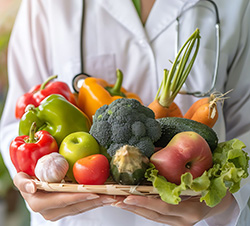
The specific responsibilities of a public health nutritionist vary based on your position and employer but are likely to differ from those of a general nutritionist. While a nutritionist deals with individuals on a one-on-one basis, a public health nutritionist addresses nutrition based on the needs of a specific group. Depending on your role, these groups can be confined and specific like schools and hospitals or broad and heterogeneous like a city or region.
Succeeding as a public health nutritionist often requires a combination of office-based and onsite duties. Before making recommendations, a public health nutritionist must work to understand the needs, resources and challenges unique to a specific group. Achieving that knowledge often requires observation and interaction with group members, leaders and others who provide different types of support and services for the targeted group.
Before making recommendations, a public health nutritionist must work to understand the needs, resources and challenges unique to a specific group.
Working as a public health nutritionist offers a career in which every day can be slightly different. One day, you may be presenting a class at a hospital to educate people with diabetes on the role of nutrition in disease management. The next day, you may be meeting with a local or state legislator to discuss how budget cuts can impact people who rely on social services for healthy nutrition.
A public health nutritionist may be responsible for the following daily tasks:
Public health nutritionists are employed in a variety of exciting settings in public, business, and non-profit sectors. You may find employment as a public health nutritionist in the following work environments:
Your education, experience and interests can impact your options for employment as a public health nutritionist. “Public health nutritionists with an MPH [Master of Public Health] degree often work in non-nutrition related programs because the MPH skills are so broad that you can work in many different areas of public health such as epidemiological surveillance, non-nutrition program administration and general health promotion or health education programs. Some work at the federal level as program analysts,” says Stang.
Public health nutritionists need advanced knowledge and experience in the principles and practices of nutrition and public health. They also need the competencies necessary to apply their expertise in the assessment, planning, organization, management, direction, coordination and evaluation of the nutritional needs of the groups they serve. Depending on your role and work environment, you may use some of these skills more often than others.
“In addition to knowing about nutrient needs, metabolism, dietary assessment methods and nutrient content of foods and beverages, public health nutrition requires that professionals understand policies such as food ordinances, land use/zoning/transportation policy and federal food assistance program regulations. Most of the work is done within community coalitions and state or local government committees, or through program planning and evaluation activities. Some public health nutritionists work primarily at the federal level, evaluating and developing policies related to federal food and nutrition standards, regulations and legislation,” says Stang.
To succeed as a public health nutritionist, it is helpful to have a combination of the following hard and soft skills:
Hard skills are the practical abilities, capabilities and skill sets related to the technical knowledge and training you need to work as a public health nutritionist. They include:
Soft skills include interpersonal and personality skills that affect the ways you work and interact with other people in your role as a public health nutritionist. They include:
“Marketing, plain language communication, social media and brief technical writing are critical skills for public health nutritionists to have. Finally, public health nutritionists must stay abreast of the continually changing regulations related to nutrition and food policies at the federal, state and local levels,” says Stang.
Becoming a public health nutritionist can be a rewarding career pathway with diverse opportunities. “Public health nutrition is an extremely dynamic field that can lead to future positions that may not even exist right now. The skill set makes you highly marketable in areas outside of nutrition, too which is nice for people who have a variety of interests,” says Stang.
Licensure requirements for public health nutritionists vary by state. Some states have no regulations regarding the profession. Research the licensing laws in your state to find out the type and level of education you need to work as a public health nutritionist there. In some cases, requirements may differ based on the type of position or work environment you seek. Knowing this information can help you select the appropriate educational pathway to reach your goals.
A bachelor’s degree in nutrition, public health nutrition, dietetics or a closely related field is the minimum educational requirement to become a public health nutritionist. Look for programs that include work experiences such as internships that can help you apply what you learn and consider your career options.
Many public health nutritionists have a master’s degree in public health. This may be a requirement for jobs in certain work environments. Some states require it for licensure. A master’s degree, along with appropriate work experience, is also necessary to qualify for some professional certifications.
If your state has licensure requirements for public health nutritionists, you must earn your license before pursuing employment. Research the process and apply for your license as soon as possible to avoid delays or gaps in employment. Pursue professional certifications, such as a Certification in Public Health (CPH) that can help you qualify for the positions you desire.
Continuing education may be a requirement for renewal of licensure or professional certification. Even if you don’t need it for these credentials, continuing education is a good way to keep up with new research, policy changes and advancements in the practice of public health nutrition.
The minimum educational requirement to become a public health nutritionist is a bachelor’s degree in nutrition, public health nutrition, dietetics or a closely related field. However, this educational requirement can vary based on the type of role you seek, employment criteria and the requirements for state licensure if you need a license in your state.
Stang advises that students look for an educational program that provides a focus on population health strategies and requires experiential learning in a public health agency. “Public health nutrition requires that people understand not just the nutrition aspects of health but also the social and economic factors such environmental health, health behavior change and intervention strategies, program planning and evaluation, policy development and evaluation, community assessment and basic epidemiology. Community nutrition or public health programs will provide these skills.”
Courses related to public health nutrition can vary based on the specific degree you pursue. Many programs require a practice experience or internship. These experiences are valuable opportunities to test the waters in the field of public nutrition and refine your interests and career goals.
Some degrees require a capstone project. This involves research and writing projects that demonstrate the skills and knowledge you learned during your studies. At the graduate level, a research-based master’s thesis may be required.
The types of subjects you will study in these degrees include:
“Many public health nutritionists have a degree in nutrition with a master’s degree in public health. Some have a degree in nutrition with extensive experience working in nonprofits or on local/state legislative or policy committees,” says Stang.
When choosing an educational program, verify that you will be attending an accredited institution and program. An accredited school has met industry standards for quality of education, criteria that are necessary if you wish to apply for federal financial aid, state licensure and/or certain certifications. In addition, credits from an accredited school can often be transferred to another school or used to meet requirements for a higher-level degree.
You can check school accreditation on the U.S. Department of Education’s Database of Accredited Postsecondary Institutions and Programs or the Council for Higher Education Accreditation (CHEA) Database.
In some states, becoming a licensed Registered Dietitian (RD) may be necessary for certain practice settings. It’s important to understand the requirements for licensure and/or certification of public health nutritionists in your state. Without the proper credentials, you may not qualify for the types of jobs you desire. Here are how these credentials differ:
A license is a credential legally required by the government to work in a specific occupation. Earning a license typically requires meeting predetermined criteria such as having a specific degree and/or passing a state-administered exam and passing state-issued criteria.
Certification is a professional credential that proves you have mastered the knowledge and skills necessary to work in a specific role. It is awarded by a professional organization to candidates who meet specified criteria for education, experience and examination.
Certification differs from a certificate. A certificate is awarded by an educational institution as proof that a student has satisfactorily completed a given curriculum. Certificate programs can help students prepare for licensure or certification exams.
Rules for licensure of public health nutritionists vary widely across U.S. states. While most U.S. states regulate registered dietitians, more than half have no educational or experience requirements for nutritionists. Some states require licensing or certification for nutritionists specifically, others award a dual dietitian/nutritionist credential that allows you to use either title in those states.
Check on your state licensure requirements by using this handy tool. Follow up with your state licensure board to confirm the requirements to ensure your chosen educational pathway will provide the requirements you need to qualify for licensure in your state.
Professional certification proves that you have mastered the knowledge and skills necessary to work in a specific role. Requirements for specific certifications can vary based on requirements by state licensure boards and/or employers.
“Many public health nutritionists are registered dietitians (have taken the Commission on Dietetic Registration examination), but that credential is not always required. There is a Certification in Public Health (CPH) credential that is required by some health departments or grant funding sources. Eligibility for this credential is through an MPH degree and examination,” says Stang.
The benefits of professional certification can include improved opportunities for employment and advancement. It may also qualify you for higher salaries. Professional certification can also help you convey your commitment to professional development and lifelong learning in your profession.
The most common professional certifications for public health nutritionists include:
Certification: Registered Dietitian (RD)
Certifying Body: Commission on Dietetic Registration
Recertification: Every five years with continuing education requirement and fee
Certification: Registered Dietitian/Nutritionist (RDN)
Certifying Body: Commission on Dietetic Registration
Recertification: Every five years with continuing education requirement and fee
Certification: Certification in Public Health (CPH)
Certifying Body: National Board of Public Health Examiners (NBPHE)
Recertification: Every two years with continuing education requirement and fee
Ongoing professional development and staying current with the latest research in nutrition is essential to succeed as a public health nutritionist. Continuing education helps you accomplish this goal in the form of seminars, conferences, courses, research and other types of professional development and career enhancement. It may also be required to prove your dedication to remaining current as a condition of licensure or professional certification renewal.
Whether by requirement or choice, pursuing continuing education in public health nutrition can help you remain current with best practices and emerging research. It can also provide opportunities to explore new interests and advance existing expertise as you expand your knowledge and skills.
The U.S. Bureau of Labor Statistics (BLS) does not report data specifically for public health nutritionists but includes this profession in its data on the more general category of dieticians and nutritionists. The job outlook for this occupational group is promising. The BLS reports a projected growth of 7.7% through 2034 for professionals in this group, more than twice the growth rate projected for all occupations during that time.
Salaries for public health nutritionists can vary depending on location, experience and specific job setting. According to the BLS, the national median wage for dietitians and nutritionists is reported to be $76,400. In this occupational category, the median annual salary for the lowest 10% of dietitians and nutritionists is $49,090, while the highest 10% of professionals in this category earn $103,720 or more.
With experience and additional education, public health nutritionists can advance to leadership roles such as program director, public health educator or research scientist. You may also qualify for new and emerging positions in which demand is high.
“With the increased focus on food insecurity and food access over the past few years, there is a big need for public health nutritionists who can work with urban planners to help create community plans and policies that assure access to food through local farmers markets, community gardens and mobile food markets. There is also a need for people who have training in environmental health and nutrition that can assist with sustainable food efforts. There is always a need for people to work in programs such as Extension and WIC,” says Stang.
Professional associations provide excellent resources for navigating every stage of your career as a public health nutritionist. Membership in a local or national professional organization can help you learn about different roles and perspectives in the field of public health nutrition. It can also help you keep abreast of industry changes and take advantage of member-only resources such as job boards, special events and educational programming. Most professional associations offer student memberships at discounted rates.
Professional associations that involve the interests of public health nutritionists include:
Association of State Public Health Nutritionists (ASPHN): ASPHN works to improve health by creating and strengthening equitable nutrition policies, systems, environments and programs for all people through the development of diverse public health nutrition leaders and the collective action of members nationwide.
American Public Health Association (APHA) Food and Nutrition Section: The Food and Nutrition Section of the APHA is a multidisciplinary group interested in local, national and global food and nutrition issues. They work to influence policies, programs, research and education related to public health nutrition.
Academy of Nutrition and Dietetics: This is the nation’s largest organization of food and nutrition professionals. The site contains continuing education resources, advocacy and policy information and food and nutrition information for consumers and professionals.
World Public Health Nutrition Association (WPHNA): WPHNA brings together professionals with a common interest in promoting and improving public health nutrition. They work to ensure that adequate nourishing food is available to and affordable for all in all possible circumstances.
A public health nutritionist career may be right for you if you are interested in the field of nutrition and have a passion for public health. In addition to the proper education and experience, having certain personality traits can help you succeed in this growing field.
“People who do well in public health nutrition are able to use systems thinking skills, so they can see the whole food and health landscape. It’s important to be able to be able to identify a wide variety of prospective partners who are often nontraditional partners such as the judicial system or urban planners. It’s also important to have good collaboration and engagement skills and the ability to think strategically through multidimensional problems,” says Stang.
Weighing the pros and cons of being a public health nutritionist can help you decide whether this is the right career for you.
While public health nutritionists can impact lasting and meaningful change, the profession has inherent challenges. “Change in policies, systems and environments is slow. It may take multiple attempts to get policies accepted at the local, state or federal level. Evaluating systems changes is a specific skill set and one that takes patience as long-term changes may not be measurable for years. Patience, perseverance and the ability to compromise are critical for public health nutritionists,” says Stang.
If you feel sure that helping communities and groups change patterns, understand the benefits of health and healthy eating and creating pathways to better lives is for you, and you are ready to make a real difference in the fight against food insecurity and chronic disease. explore our public health nutrition programs today. All you need to do is click the Find Schools button to begin researching online or classroom degree programs.